Pitch
1. Note Draw
Draw a target note and sing it cleanly.
A focused note-memory drill with instant pitch feedback.
Improve singing pitch with short games for note matching, pitch holds, interval recognition, scales, and melodic memory. Every round is scored, every session earns XP, and your best scores stay on your journey.
Try the free online singing pitch test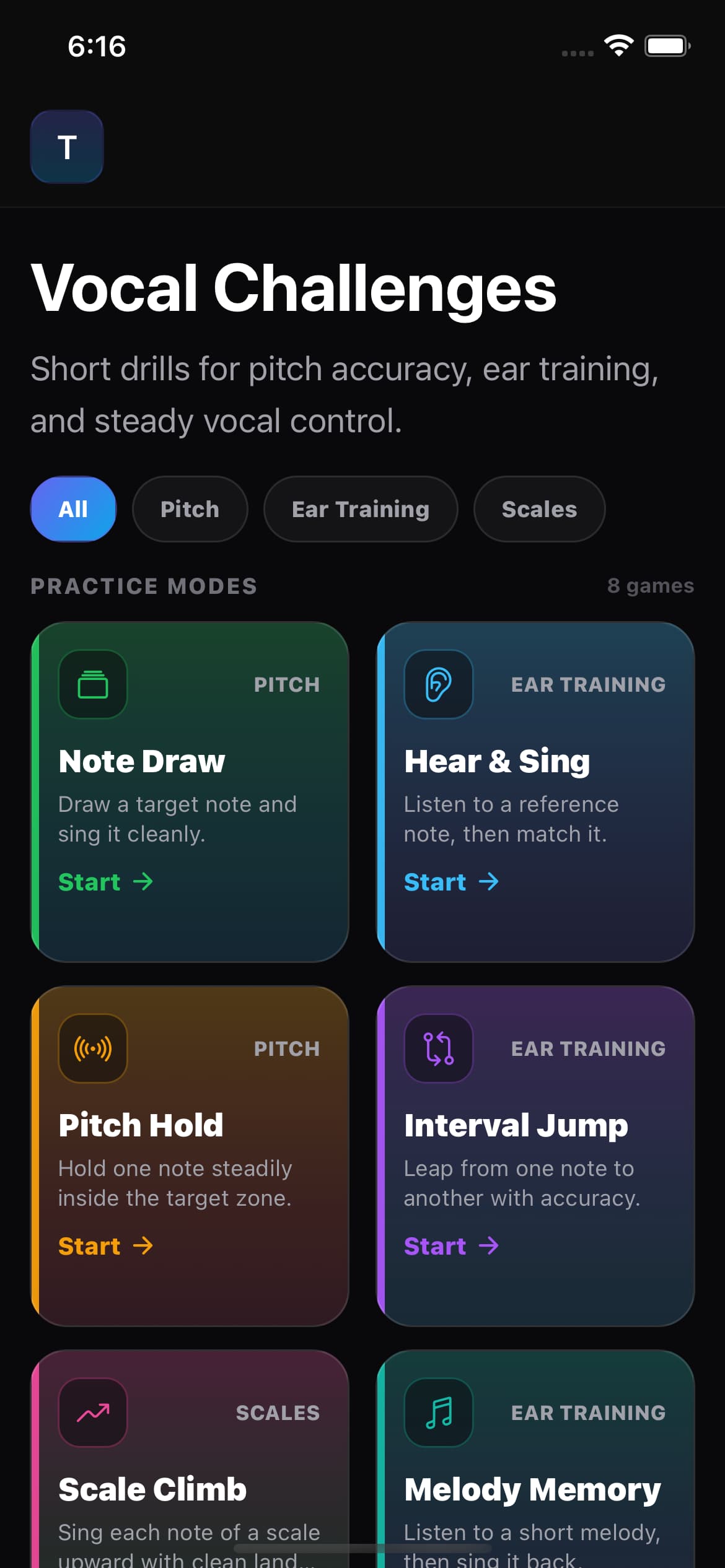
8 games
Pitch, ear training, scales
3 tolerances
±50, ±25, ±12 cents
4 difficulties
Beginner to Advanced
Leaderboards
Weekly and seasonal
Each game targets one skill a singer needs — pitch matching, intervals, scales, memory, or note recognition — so the drills stay short and focused.
Draw a target note and sing it cleanly.
A focused note-memory drill with instant pitch feedback.
Listen to a reference note, then match it.
Train the ear-to-voice connection with short echo rounds.
Hold one note steadily inside the target zone.
Build breath control, stability, and confidence on sustained notes.
Leap from one note to another with accuracy.
Train melodic jumps used in real songs by hearing a start note and landing the target interval.
Sing each note of a scale upward with clean landings.
Build scale familiarity, pitch movement, and daily riyaz control.
Listen to a short melody, then sing it back.
Train musical memory, phrase accuracy, and ear-to-voice connection.
Hear a note and identify its name.
Build ear training and note recognition without needing to sing every round.
Hear two notes and name the interval.
Build melodic distance, harmony, and song-jump recognition.
Two games are singing-based pitch drills (Note Draw, Pitch Hold), one builds scales (Scale Climb), and five train ear-to-voice or listening skills.
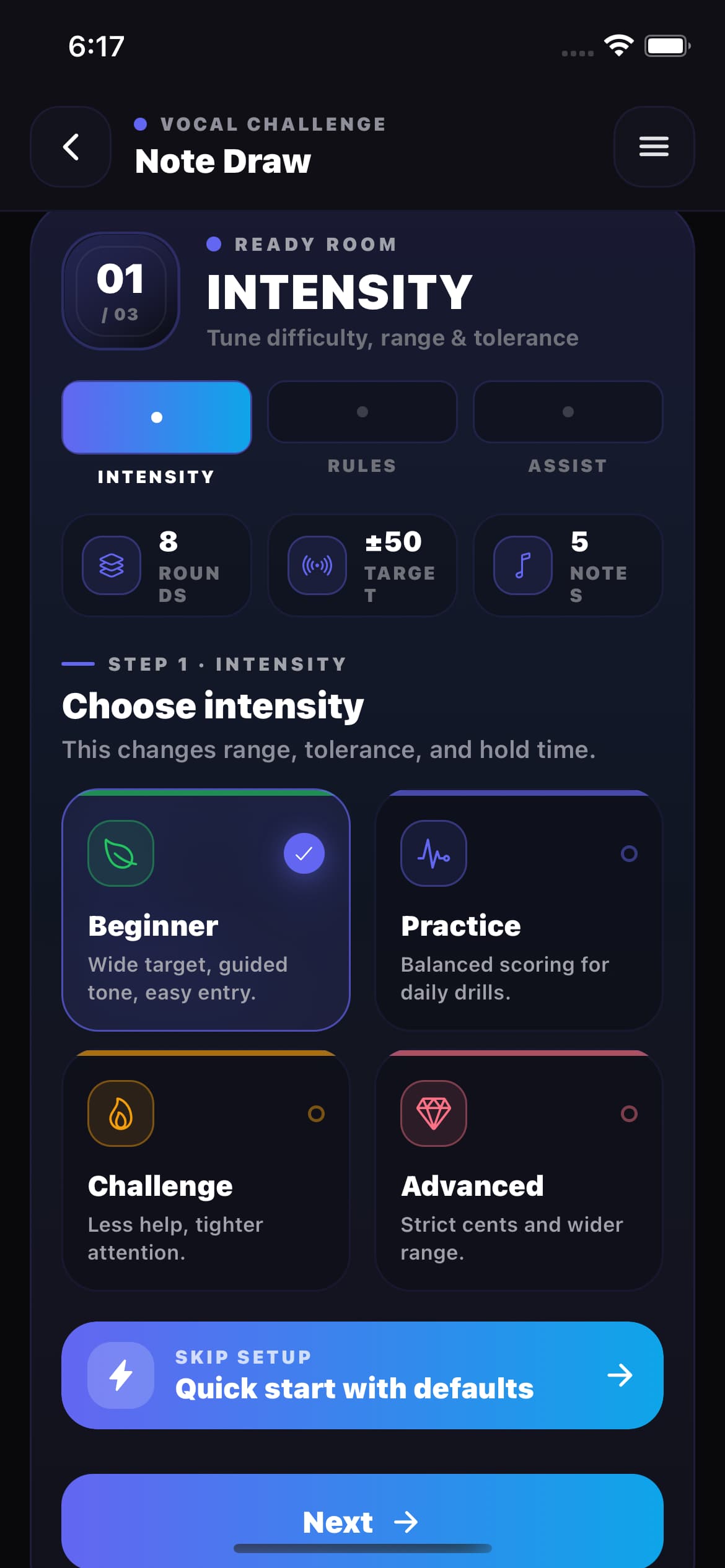
Each game lets you choose a difficulty and a pitch tolerance. Higher difficulties add a wider note range, longer hold times, and an assistance penalty for replaying the reference. Strict tolerance narrows the in-tune window to ±12 cents.
Relaxed tolerance, small note range
Normal tolerance, wider note range
Normal tolerance, full range, assistance penalty
Strict tolerance, two-octave range, longer holds
Default rounds vary by game: 8 for most drills, 5 for Pitch Hold, 3 for Scale Climb and Melody Memory. Round options: 5, 8, 10, or 12.
Every round is scored 0–100 from three components: pitch accuracy (how close your average cents are to the target), stability (how steady your pitch is), and coverage (the share of samples inside the tolerance window). Challenge difficulty subtracts points for extra reference replays.
Average distance from the target note, scaled by your tolerance.
Standard deviation of your cents across the round. Steadier scores higher.
Share of sung samples that fall inside the in-tune window.
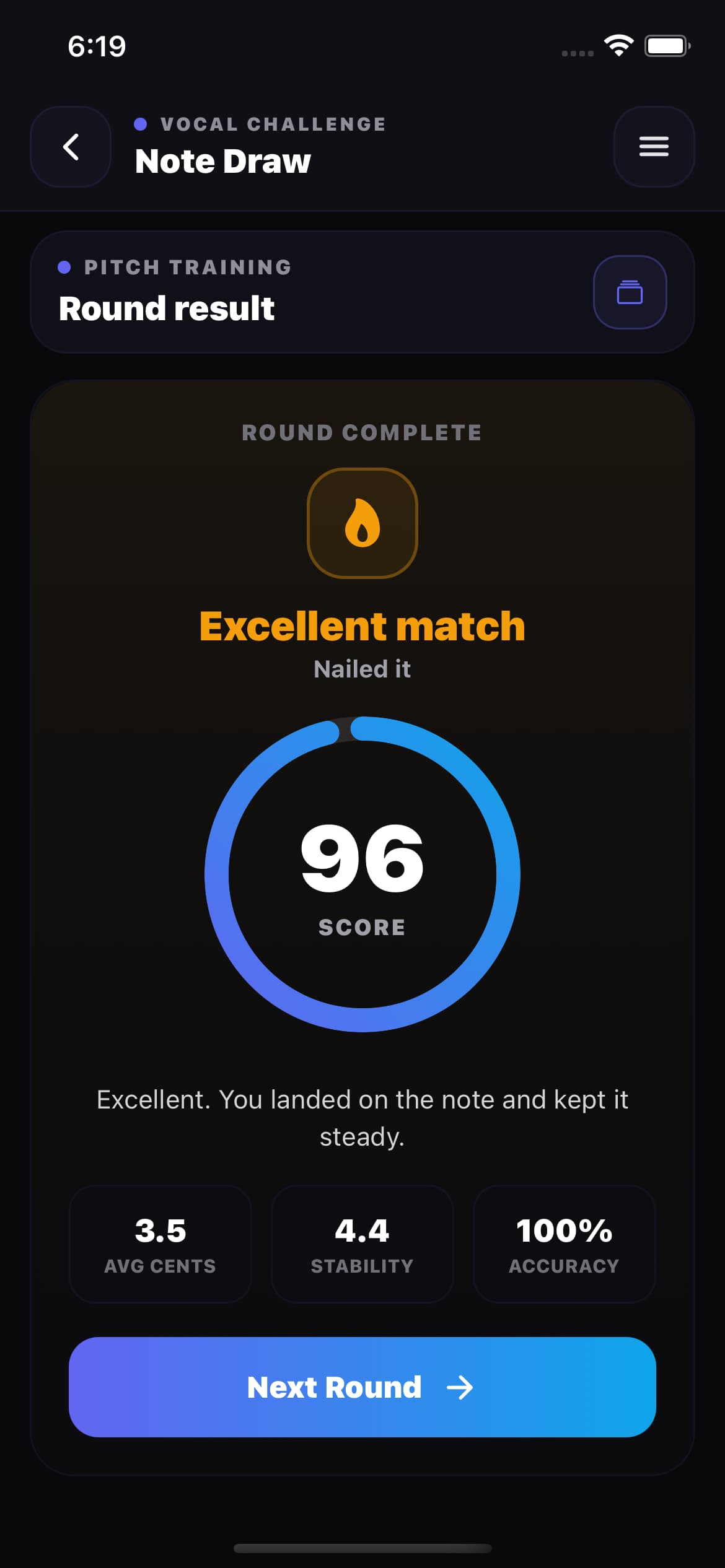
You landed on the note and kept it steady.
Good match. Keep the center a little steadier.
Close. Listen for the center and adjust in smaller steps.
Play the reference, breathe, then enter gently on the target.
Completing a challenge earns XP, tracks your personal best per game, and feeds weekly and seasonal leaderboards.
Log in each day to build a streak. Milestones award bonus XP.
Your best score for each game is saved and surfaced on the challenges home.
Weekly and seasonal leaderboards rank singers and offer rewards.
XP for vocal challenges is capped daily so the rewards reward real practice, not grinding. The completion and best score are still recorded even after the cap.
Build pitch accuracy through short, scored drills while keeping the role and limits of each game clear.
A pitch training app gives you short exercises for hearing, matching, holding, and identifying notes. Singers AI combines eight singing and ear-training games with difficulty settings, scoring, personal bests, and XP.
The eight games cover target-note matching, steady pitch holds, interval jumps, scale singing, melody memory, note-name recognition, and interval recognition.
Each game uses its own round logic and scoring. Singing challenges compare your detected pitch with the target, while the selected difficulty changes the available notes, tolerance, range, or hold requirements.
No. The games support pitch accuracy, relative-pitch listening, note recognition, and ear-to-voice practice. They do not promise that every singer will develop absolute or perfect pitch.
Pitch games are short drills that build ear-to-voice accuracy and pitch stability. They work alongside your song preparation and practice workflow — they are not a replacement for structured lessons or a claim to be the only gamified singing app. Background noise and microphone placement can affect pitch detection.
Play eight singing and ear-training games, track your best scores, earn XP, and climb the leaderboard.