
How to Fix Sharp or Flat Singing Notes
A note can feel correct while still landing sharp or flat. Learn how to find the note that needs attention, hear the target on a piano, and use a pitch meter to bring it closer.
Check your pitch for free
Sing a steady note and see its note name, cents, Hz, and sharp or flat direction.
The short answer
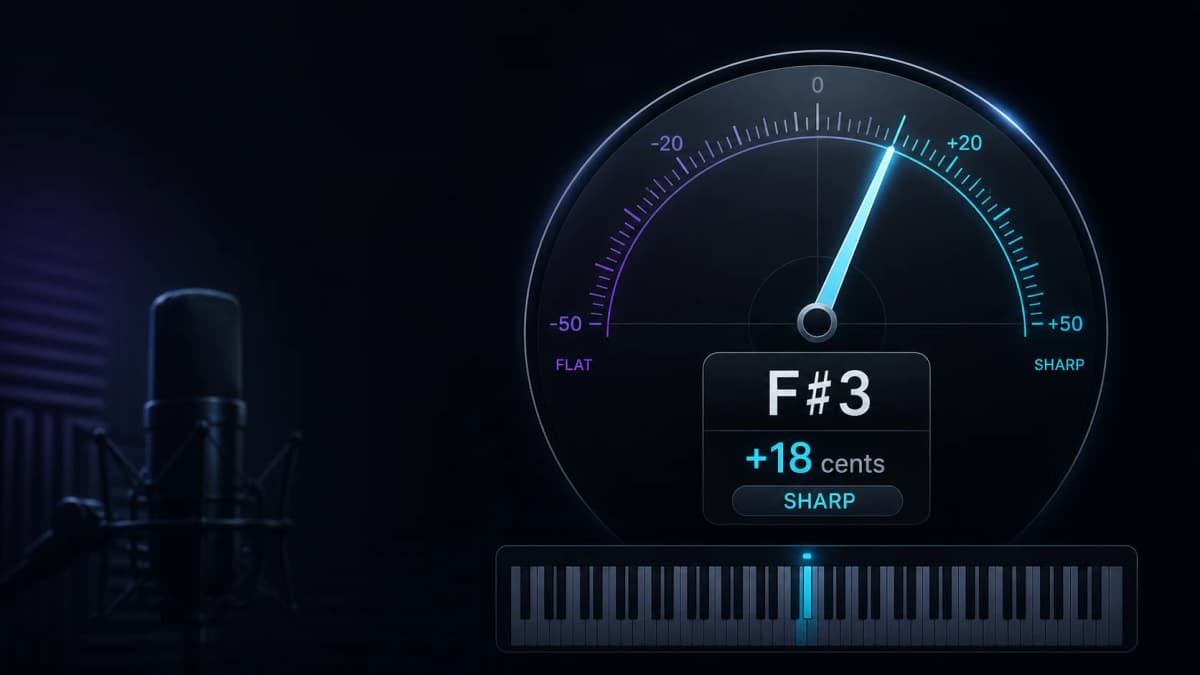
Sharp means your sung pitch is above the target. Flat means it is below the target. Sing the full scale to find which note is drifting, isolate that note, hear the target on a piano, adjust it slowly, hold it, and check the meter again.
What sharp and flat mean when you sing
When a sung note is sharp, your pitch is higher than the target. When it is flat, your pitch is lower than the target. The target is the note you intended to sing, not a judgment about whether your voice sounds good or bad. The Open University explains the same basic pitch direction in its music-theory guide.
The Singers AI Pitch Detector gives you a measurement-based starting point. Sing a steady note and it shows the nearest chromatic note, octave, frequency in Hz, signed cents, and whether the pitch is flat or sharp.
Why a note can feel right but still be sharp or flat
Your internal sensation is useful, but it is not the same thing as an external measurement. While you sing, you hear your own voice and feel the physical action of producing the note. That can make a familiar note feel settled even when it is slightly above or below the reference you intended.
That is why it helps to separate two jobs: use your ear and body to notice what the note feels like, then use a reference and a pitch meter to check where the note actually landed. Research on pitch matching uses isolated piano tones as reference stimuli, and singing studies measure pitch distance in cents while examining training and feedback conditions.[^1][^2]
My Ma example: the note sounded correct to me
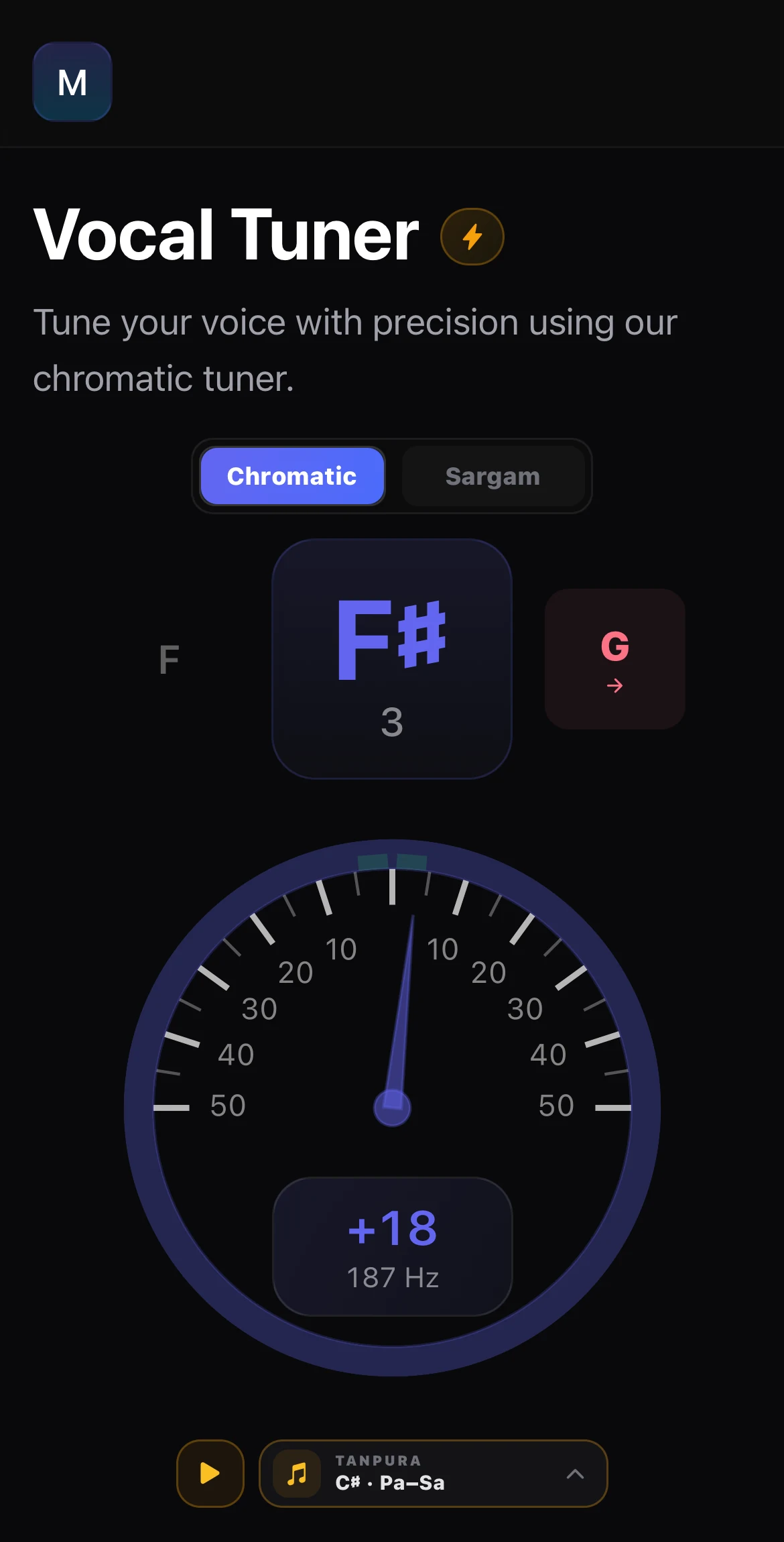
While practising with C♯ as my starting Sa, I sang the scale Sa Re Ga Ma Pa Dha Ni Sa. In this example, Ma was F♯. Readers who use Western solfège can think of Ma as the fourth step, comparable to Fa in Do Re Mi Fa. Here, Fa describes the position in the sequence; the actual pitch in my C♯ example is F♯. I am not using this example to define a complete C♯ major scale or to map every note between the two systems.
When I reached Ma, it felt correct by ear and by physical feel. But when I checked the tuner, I saw that I was about +20 cents. That meant I was singing the note above the target, even though it sounded right to me.
This is my personal example, not a rule that every singer will have the same problem on Ma. Your inaccurate note may be a different step, and you may drift flat rather than sharp. The full-scale check helps you find the note that needs attention.
How to fix a sharp or flat singing note
This is the sequence that helped me work on that note.
- 1
Sing the full scale once
Start from your chosen Sa and sing through the scale slowly enough to observe each note. Watch the meter, but do not assume in advance which note will be inaccurate.
- 2
Isolate the inaccurate note
Once you know which note is drifting, stop running the whole scale and work on that note by itself.
- 3
Hear the target on a piano
Use a piano reference to hear the correct target note directly. This gave me a sound outside my own voice to match.
- 4
Slowly adjust and hold the note
Lower or adjust the sung pitch toward the correct target, then hold it. Notice the sound and physical sensation of the centred note.
- 5
Check the meter again
Use Vocal Tuner while you practise. Connect the piano sound, the way the note feels, and what the meter shows.
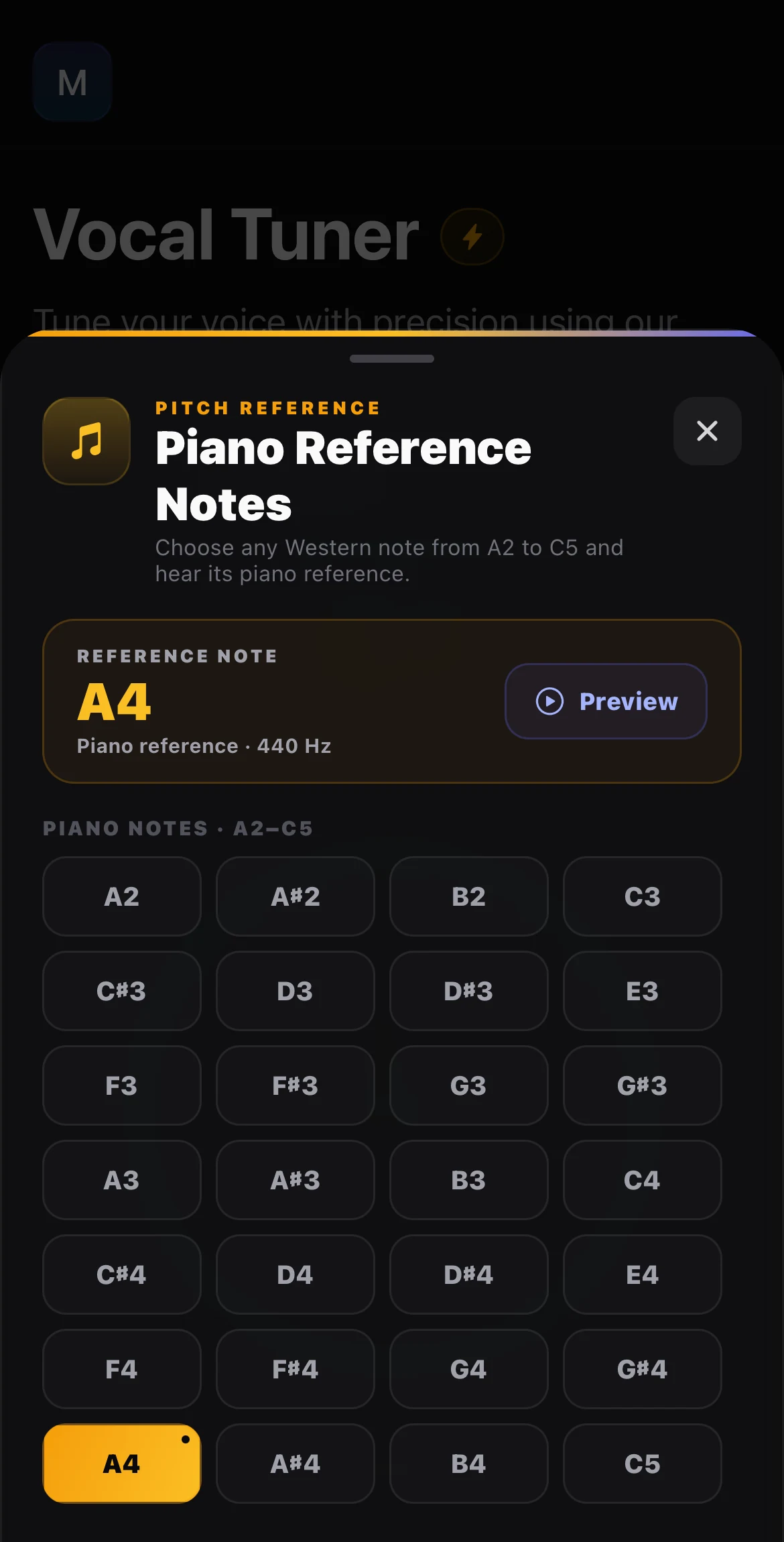
The Singers AI Vocal Tuner includes piano reference tones. Play the target, listen carefully, try to sing the same pitch, and use the meter to check it.
What does +20 cents sharp mean?
A cent is a small unit for describing musical interval distance. In the Western equal-tempered system, one semitone is 100 cents and one octave is 1,200 cents. The Open University's explanation of frequency and note identity describes this measurement system.[^3]
When the meter shows approximately +20 cents, the detected pitch is above the target note by about 20 cents in the meter's reference system. A negative value indicates flat; a positive value indicates sharp. It is not a percentage, and it is not a score for your voice.
The Pitch Detector shows signed cents so you can understand the direction and size of the drift. It does not auto-tune you, change your audio, rate your singing quality or diagnose your voice. It gives you information to use while you make the adjustment yourself.
What this method can—and cannot—fix
This workflow is for a specific note that is landing sharp or flat. It helped me work on Ma because the meter showed me a problem my ear had not identified yet.
It is not a promise that one exercise will fix every pitch problem, tone issue or singing habit. It also does not diagnose a vocal or hearing condition. If singing causes pain or persistent vocal strain, stop and seek qualified professional advice.
Start with one comfortable note. Sing the full scale, find the note that needs attention, hear the target on a piano, adjust the isolated note slowly, and check it again. The more clearly you can connect the reference sound, your physical sensation and the measured result, the more useful your practice becomes.
Check one note today
Use the Pitch Detector for the live reading, then open Vocal Tuner when you want a piano reference to practise against.
Check your pitchContinue with related singing guides
Once you can see the drift, use these guides to check your overall pitch and choose notes that fit your voice.