
Sargam Practice Exercises: 10 Alankars to Sing Every Day
Alankars, also called paltas, are small patterns that move through the swaras in a fixed order, like Sa Re Ga Ma, Ma Ga Re Sa. They are the daily exercises singers use to build pitch accuracy, flexibility, and control, once they can sing the basic Sa Re Ga Ma cleanly.
The 10 patterns below are the standard ones every beginner learns. They are not something I invented. What I can share is how I actually practise them: with a Tanpura drone and a tuner, which is what let me fix each note instead of guessing. New to the swaras? Start with what sargam is first.

Before you start
You need two things: your Sa, and a drone holding it.
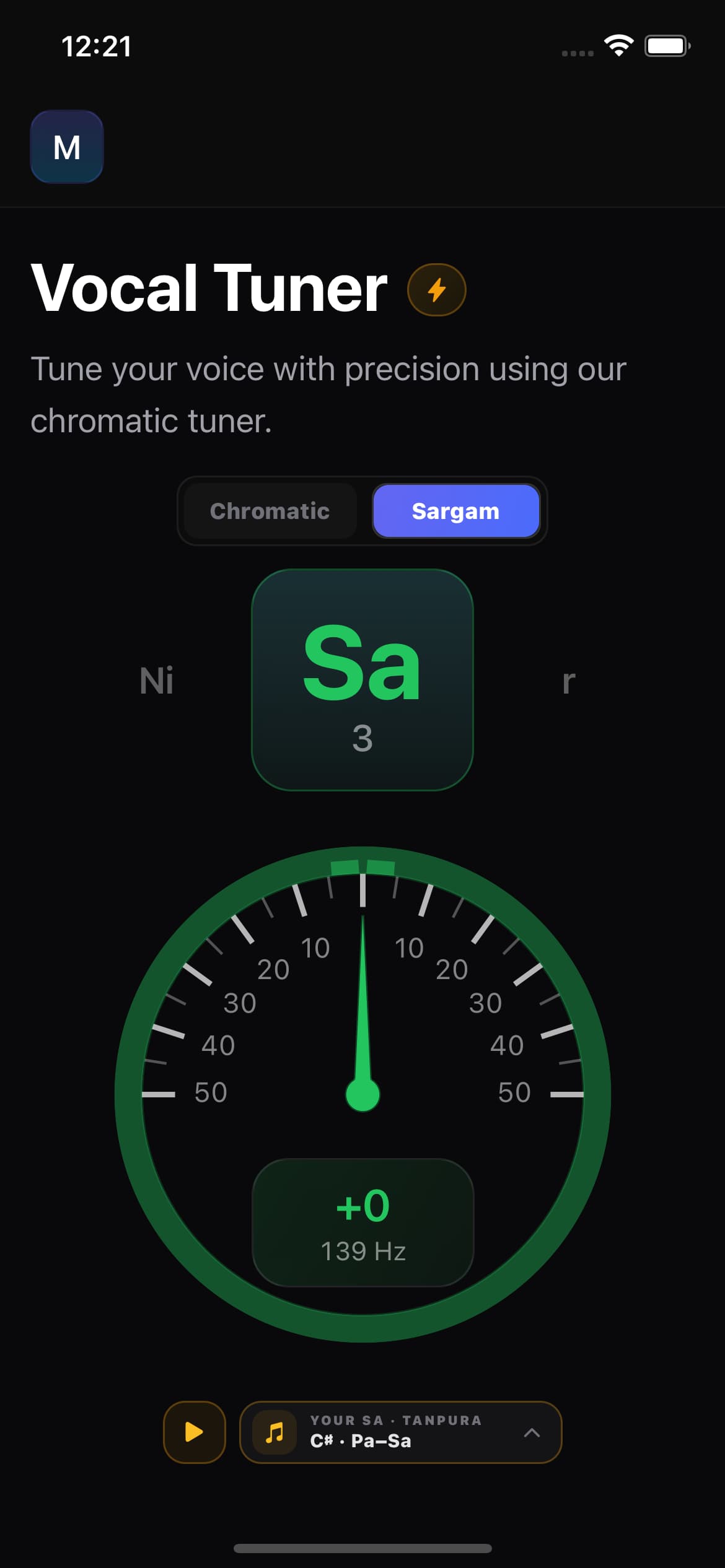
Pick a Sa that sits comfortably in your voice. C♯3 is a common starting point and the default in the Singers AI Sargam & Tanpura feature. Play the Tanpura on that Sa so it drones underneath you the whole time. The drone is not optional for this. It is the reference your ear leans on while you find each note.
The 10 alankars
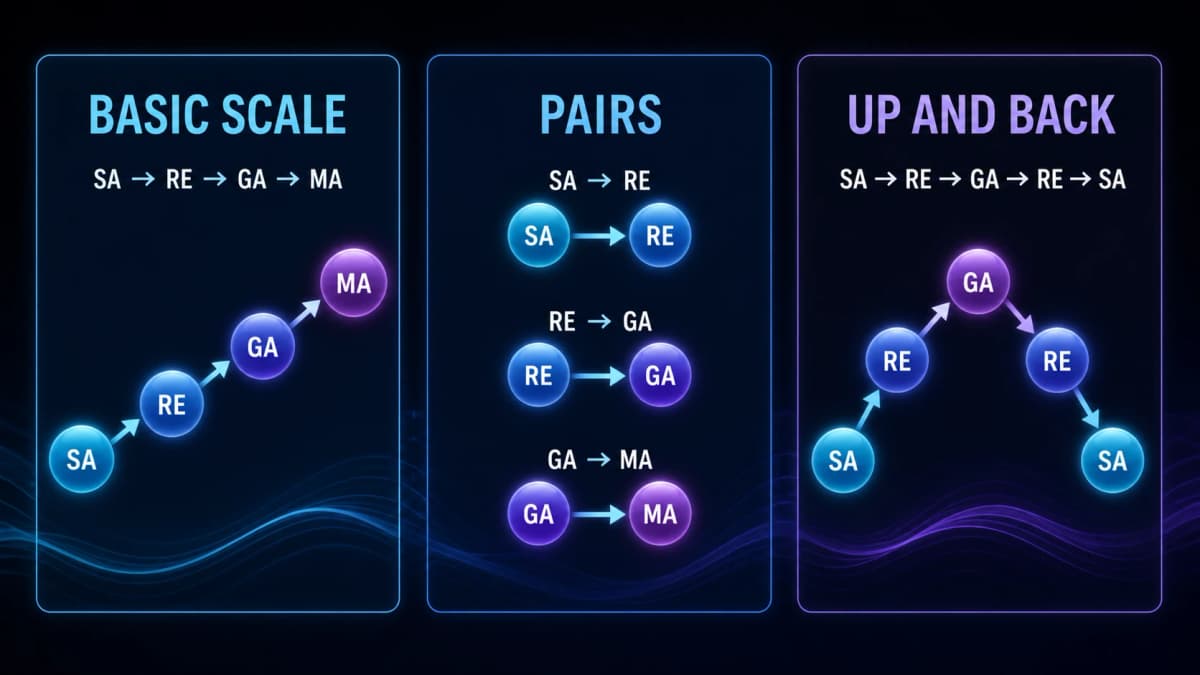
Sing each pattern up (aroh) and then back down (avroh). “Sa” with a mark after it, written Sa', means the higher Sa an octave up.
1. The basic scale
UpSa Re Ga Ma Pa Dha Ni Sa'
DownSa' Ni Dha Pa Ma Ga Re Sa
2. Pairs
UpSa Re, Re Ga, Ga Ma, Ma Pa, Pa Dha, Dha Ni, Ni Sa'
DownSa' Ni, Ni Dha, Dha Pa, Pa Ma, Ma Ga, Ga Re, Re Sa
3. The turn
UpSa Re Sa, Re Ga Re, Ga Ma Ga, Ma Pa Ma, Pa Dha Pa, Dha Ni Dha, Ni Sa' Ni
DownSa' Ni Sa', Ni Dha Ni, Dha Pa Dha, Pa Ma Pa, Ma Ga Ma, Ga Re Ga, Re Sa Re
4. Three in a row
UpSa Re Ga, Re Ga Ma, Ga Ma Pa, Ma Pa Dha, Pa Dha Ni, Dha Ni Sa'
DownSa' Ni Dha, Ni Dha Pa, Dha Pa Ma, Pa Ma Ga, Ma Ga Re, Ga Re Sa
5. Up and back
UpSa Re Ga Re Sa, Re Ga Ma Ga Re, Ga Ma Pa Ma Ga, Ma Pa Dha Pa Ma, Pa Dha Ni Dha Pa, Dha Ni Sa' Ni Dha
DownSa' Ni Dha Ni Sa', Ni Dha Pa Dha Ni, Dha Pa Ma Pa Dha, Pa Ma Ga Ma Pa, Ma Ga Re Ga Ma, Ga Re Sa Re Ga
6. Four in a row
UpSa Re Ga Ma, Re Ga Ma Pa, Ga Ma Pa Dha, Ma Pa Dha Ni, Pa Dha Ni Sa'
DownSa' Ni Dha Pa, Ni Dha Pa Ma, Dha Pa Ma Ga, Pa Ma Ga Re, Ma Ga Re Sa
7. Zigzag (up then down each group)
Sa Re Ga Ma, Ma Ga Re Sa
Re Ga Ma Pa, Pa Ma Ga Re
Ga Ma Pa Dha, Dha Pa Ma Ga
Ma Pa Dha Ni, Ni Dha Pa Ma
Pa Dha Ni Sa', Sa' Ni Dha Pa
8. Skipping a note (thirds)
UpSa Ga, Re Ma, Ga Pa, Ma Dha, Pa Ni, Dha Sa'
DownSa' Dha, Ni Pa, Dha Ma, Pa Ga, Ma Re, Ga Sa
9. Five in a row
UpSa Re Ga Ma Pa, Re Ga Ma Pa Dha, Ga Ma Pa Dha Ni, Ma Pa Dha Ni Sa'
DownSa' Ni Dha Pa Ma, Ni Dha Pa Ma Ga, Dha Pa Ma Ga Re, Pa Ma Ga Re Sa
10. Doubles
UpSa Sa Re Re Ga Ga Ma Ma Pa Pa Dha Dha Ni Ni Sa' Sa'
DownSa' Sa' Ni Ni Dha Dha Pa Pa Ma Ma Ga Ga Re Re Sa Sa
How I practise them: drone plus tuner
This is the same method I use for basic sargam, applied to the patterns.
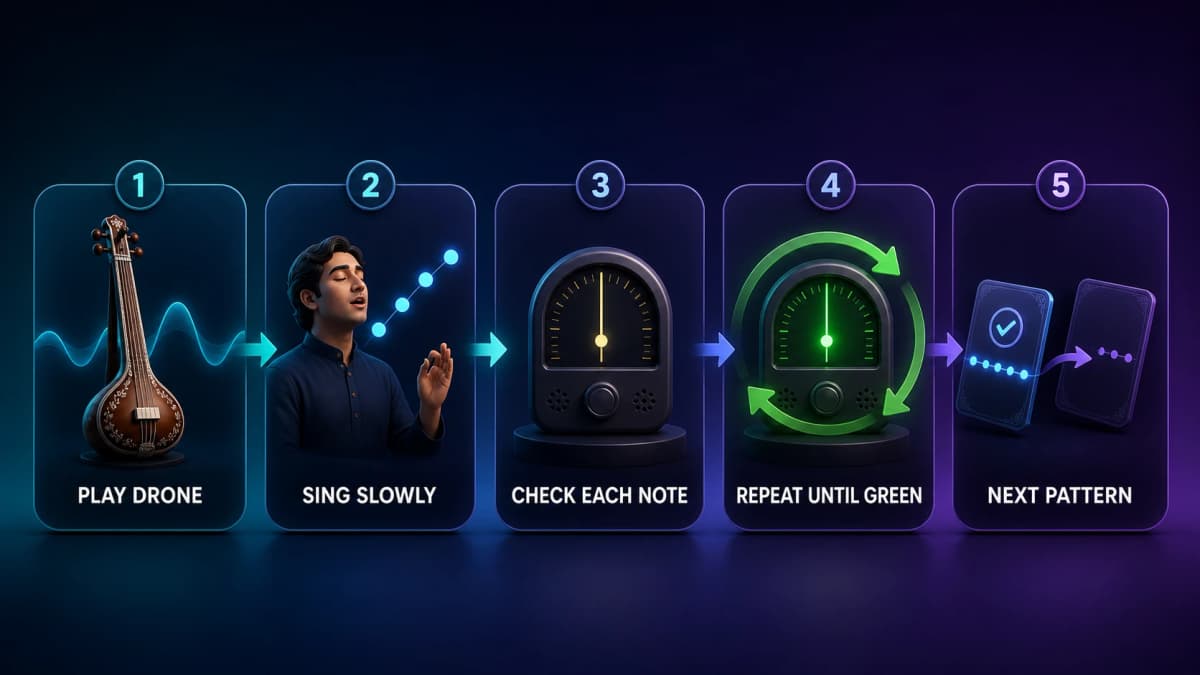
- Put on your earphones and play the Tanpura drone on your Sa.
- Take one alankar and sing it slowly, one note at a time.
- Watch the tuner meter on each note. It shows you exactly where your pitch is landing, sharp or flat.
- If a note is off, move your voice up or down until the meter says you are on it, then carry on.
Early on, my ear could not tell me whether a note in the pattern was right. The meter could. I did not have to guess. I just corrected each note to the reading, and over time my ear learned where the notes were, so I needed the meter less and less.
Practise slowly first
The point of an alankar is not speed. It is clean, accurate notes. Sing every pattern slowly enough that you can actually hit each swara before moving to the next one. Speed comes on its own, later, once the notes are reliable. If you rush, you just practise your mistakes faster.
Do not force your range
Some of these patterns reach up to the higher Sa and, if you extend them, below your Sa. Do not strain for notes that are not comfortable yet. Stay within the range you can sing cleanly, and let it grow with practice. A pattern sung comfortably in a smaller range is worth far more than a pattern strained across a wide one.
A simple daily order
Always start from the first alankar. Sing it slowly against the meter and repeat it as many times as you need. Only move on to the next pattern once the current one is fully in control, when every note lands in the green on the meter. There is no rush to reach pattern ten. Mastering them in order, one at a time, is the whole point.
Fifteen minutes a day is plenty. Some days you may only get through two or three patterns cleanly, and that is fine. Fix the notes first, and let speed and range build on their own.
What comes next
Once these feel comfortable and accurate, alankars become the base for fuller riyaz and for singing actual songs in tune. The habit is the same the whole way up: fix each note first, then trust your ear.
If you want to understand the tuner meter itself, the guide on whether you are singing in tune walks through reading it.
Practise your alankars with a drone and a meter.
The Sargam & Tanpura feature sets your Sa, plays the Tanpura drone, and shows the pitch meter as you sing, so you can fix each note in every pattern.
Practise with the free Online Tanpura Explore Sargam & TanpuraRelated guide
New to the swaras? Read What Is Sargam? Sa Re Ga Ma Explained for New Singers before starting these exercises.